
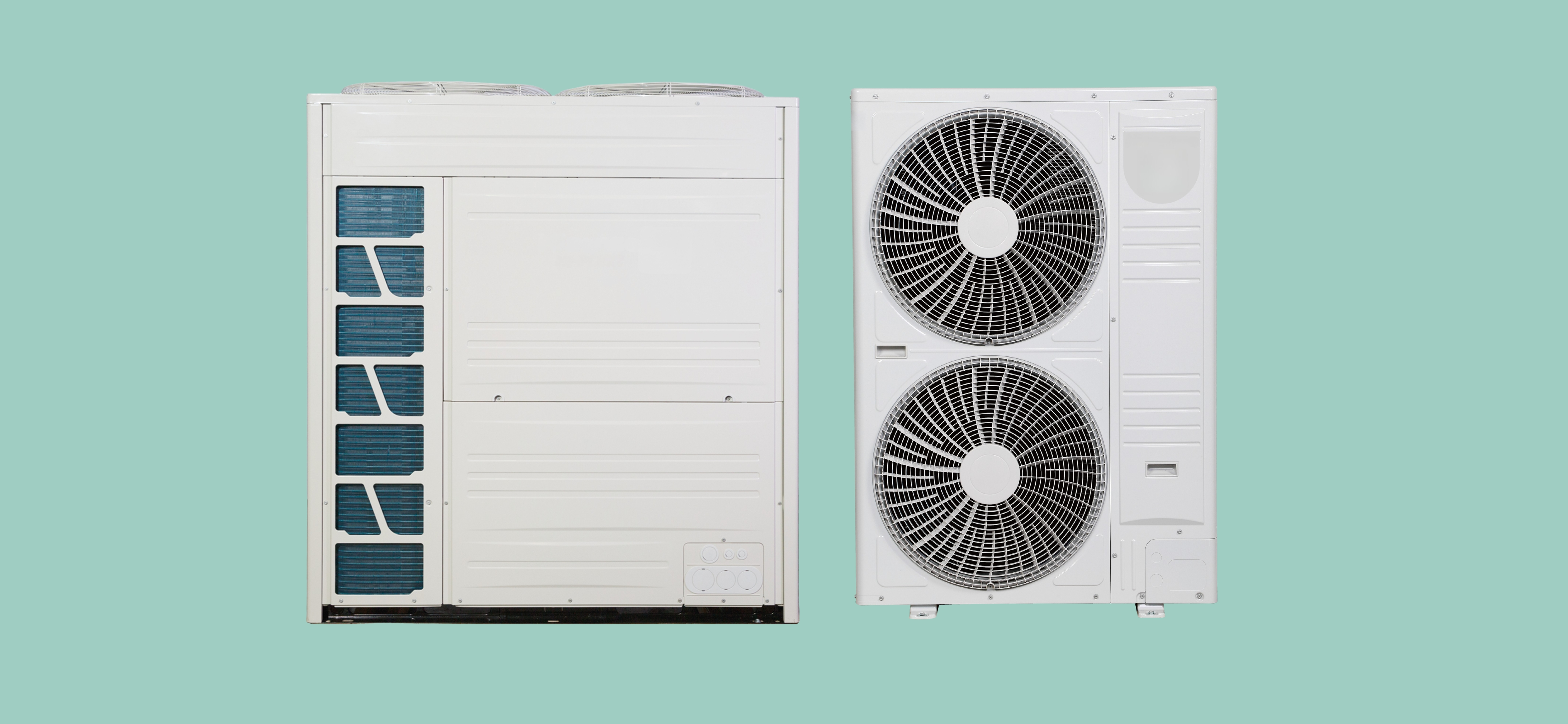
Programme Focus: Variable Refrigerant Flow (VRF)


Variable Refrigerant Flow (VRF) systems have become one of the most widely adopted HVAC technologies for commercial and high-end residential buildings due to their flexibility, energy efficiency, and ability to provide simultaneous heating and cooling across multiple zones. Commonly applied in offices, hotels, healthcare facilities, retail spaces, educational buildings, and mixed-use developments, VRF systems allow precise indoor climate control by modulating refrigerant flow according to the real-time demand of each occupied space.
Compared with conventional chilled water or packaged systems, VRF technology offers significant advantages including reduced energy consumption, compact installation requirements, lower noise levels, heat recovery capability, and improved occupant comfort. The growing focus on building decarbonisation, operational efficiency, and intelligent building management has further accelerated the adoption of VRF systems across global markets.
Why do we need VRF certification?
As the VRF market has expanded, so too has the importance of independent product certification to verify manufacturer performance claims. VRF systems are inherently complex, with performance varying significantly depending on operating conditions, ambient temperatures, piping configurations, load diversity, and control strategies. This means that the accuracy and comparability of manufacturer performance data is paramount when making product and design decisions.
Certification programmes such as Eurovent Certified Performance provide an impartial framework for validating VRF performance data against recognised European and international standards. Through laboratory testing, data verification, and ongoing surveillance processes, certification ensures that declared capacities, efficiencies, sound levels, auxiliary power consumption and operating limits are accurate and consistently maintained. Crucially, it also allows the data from different products within the VRF programme to be directly compared – as all units have gone through the same process regardless of manufacturer or location. This gives specifiers greater confidence when selecting equipment, supports fair competition among manufacturers, and reduces the risk of underperformance in installed systems.
For building owners and developers, certified VRF products also contribute to improved energy modelling accuracy and support compliance with building regulations, green building schemes, and sustainability targets. Since HVAC systems typically represent one of the largest energy consumers within a building, verified performance data is essential for achieving predicted operational efficiency and lifecycle cost savings. In this context, Eurovent Certified Performance has become an increasingly important benchmark for quality, transparency, and reliability within the global VRF industry.
What products are included?
The Eurovent Certified Performance programme scope for Variable Refrigerant Flow (VRF) applies to:
- Single module outdoor units for VRF with a cooling capacity up to 100kW
- VRF units below 12 kW, declared and published as a combination of outdoor and indoor units according to the testing limits.
Cooling-only, heating-only and reversible, VRF systems are divided into three types of products:
- VRF1: Air-sourced VRF systems
- VRF2: Water-sourced VRF systems
- VRF3: High ambient VRF systems (Desert Certification)
Manufacturers can apply for more than one type of product. Plus, Desert Certification is available as an option for units destined for the Middle East market.
Participating companies must certify all units within the scope of the programme that are mandatory. Heat recovery units are included in the scope, but the heat recovery function is not certified. All programme requirements and exclusions can be found in the Technical Certification Rules.
What is certified?
For the admission and yearly surveillance procedures, 15% of the listed basic model group is tested by an independent laboratory.
A factory audit is organised every year.
Main certified characteristics and acceptance criteria include:
- Capacity (cooling and heating) at standard rating conditions −8%
- Efficiency (EER and COP) at standard rating conditions −10%, and part loads (different %s depending on the part load).
- Seasonal Efficiency (SEER and SCOP) – 0.5%
- A-weighted sound power level +2 dB (A)
- Auxiliary power consumption +10%
- Minimum continuous operation Load Ratio: Lrcontmin + 5%,
- CCPLrcontmin -10%
- Unit check (dimensions, airflow, weight) 5 to 10%.
- Heat exchanger rows and lines 0%
What are the testing standards?
VRF units certified under this Eurovent Certified Performance programme are tested to:
- EN 14511
- EN 14825
- EN 12102, ISO 9614
- ISO 15042, SASO 2874 and GSO 03 Draft for Desert Certification option.
You can find out more about the certification rules and requirements in the Technical Certification Rules and Certification Manual on our Eurovent Certified Performance for VRF page.
Recent developments
Desert Certification
The Desert Certification option is now available for VRF units. Designed specifically for Bahrain, Kuwait, Oman, Qatar, Saudi Arabia, and the UAE, the Desert Certification option tests products at T1 (35°C), T3 (46°C), and operability at 52°C, with even harsher conditions for Kuwait. It also introduces the Desert Seasonal Energy Efficiency Ratio (DSEER), a metric that reflects real-world, part-load conditions, providing more accurate data for specifiers, developers, and end users.
Why choose Eurovent Certified Performance?
Eurovent Certified Performance for VRF units offers a comprehensive, independent and impartial certification programme, which goes far beyond laboratory testing alone.
This programme includes:
- Independent laboratory tests
- Factory audits
- Full analysis and validation of all supplied data (including marketing materials)
- Surveillance process to ensure continued conformity.
Evaluation protocols are uniform to ensure the certification process is fair and equal for all manufacturers. Eurovent Certification:
- Evaluates VFR units according to the same criteria
- Expresses results in the same unit of measurement, regardless of the country where the products are manufactured or marketed
- Ensures all products within the programme go through exactly the same certification and surveillance process
- Impartiality standards are kept high as partner laboratories are accredited and independent, keeping the process clear of any bias.
As all VRF units go through the same process, decision makers can directly compare this data when making product decisions, via the free to access certified product directory.
 Read also
Air Conditioning: Price vs performance
Introducing desert certification
Join our LinkedIn community!

Certify Your Products

Get your certified HVAC&R project recognised