Heat exchangers: Price vs performance


Summary
This article explores the relationship between price and performance in refrigeration equipment - Direct Expansion (DX) air coolers (HFC and CO₂), air-cooled condensers, CO₂ gas coolers, and dry coolers - highlighting how decision-makers can move beyond simple equipment cost (investment) comparisons to evaluate true lifecycle value (TCO analysis: Total Cost of Ownership).
Heat exchanger specification
When evaluating heat exchangers for refrigeration and process cooling applications, the purchase price is often the first parameter considered. Air-cooled condensers, CO₂ gas coolers, dry coolers, and DX air coolers can differ significantly in price, leading buyers to focus on capital expenditure during procurement.
However, the true value of a heat exchanger extends far beyond its initial cost. The real question is not how much equipment costs to buy, but how well it performs throughout its operational lifetime. A lower-priced unit that fails to deliver its declared capacity can have far-reaching consequences on system performance, energy consumption, operating costs, and sustainability objectives.
By considering efficiency, operating conditions, and system integration, it becomes possible to make more informed choices that optimise both financial and environmental outcomes.
What is the impact of poor product selection?
In refrigeration systems, some buyers look mainly on the investment and may choose cheaper units or propose units with higher capacity than required to compensate for any gap in performance. Yet, this approach can lead to significant inefficiencies over the system’s lifetime. The choice between lower-cost equipment and higher-performance solutions is rarely straightforward, as it directly impacts energy consumption, operating costs, reliability, and even regulatory compliance.
While a cheaper product may appear economically advantageous at the procurement stage, if that product has suboptimal performance it can result in higher energy consumption, reduced system lifespan, increased maintenance requirements, and potential non-compliance with regulatory or design expectations. Over the lifecycle of the installation, these factors can significantly outweigh any initial capital savings.
Conversely, high-performance equipment may deliver long-term savings and operational stability - but requires a stronger upfront commitment and careful justification. This underscores the importance of prioritising validated performance and long-term operational efficiency over upfront cost alone.
Heat exchangers play a critical role in refrigeration systems by transferring heat efficiently between the refrigerant and the surrounding environment. Their performance directly influences condensing temperature, compressor workload, energy consumption, and overall system efficiency.
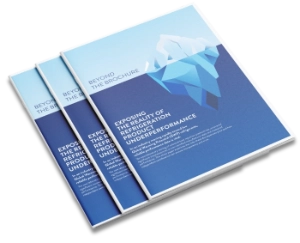
When a heat exchanger delivers less capacity than declared, the refrigeration system must compensate. In practical terms, compressors operate at higher compression ratios, run longer, and consume more electricity to maintain the required cooling load. The result is increased operating costs and reduced system efficiency. Independent investigations into refrigeration equipment performance have highlighted the scale of this issue. A new white paper, Beyond the brochure: Exposing the reality of refrigeration product underperformance, has crunched the numbers. Laboratory testing of selected uncertified CO₂ gas coolers demonstrated significant capacity deficits under various European climates, while previous studies on uncertified condensers revealed substantial performance gaps:
- Laboratory tests on uncertified CO₂ gas coolers found that heat rejection capacity could be up to 53% lower than declared in Central and Northern European climates and up to 37% lower in warm weather climates.
- A previous study on uncertified HFC condensers found heat rejection capacity underperformance of up to 32.5%.
The impact of underperformance was modelled on HFC and CO2 supermarket refrigeration installations scenarios over a 15-year lifespan. Performance modelling of both systems showed that equipment underperformance can lead to:
- 650000+ kWh of additional energy use
- At a cost more than €117,000 over the lifecycle of the product
- Creating at least an additional 219 tonnes of carbon emissions.
This is all avoidable by using a holistic approach to product selection and ensuring that performance data is accurate and independently verified.
Why performance matters technically?
The thermal performance of a heat exchanger depends on factors including heat transfer surface area, coil geometry, tube arrangement, fin design, airflow distribution, fan performance, refrigerant characteristics, and pressure drop optimisation.
Reducing manufacturing costs often means compromises in one or more of these areas. Smaller coil surfaces, simplified circuiting, lower-quality materials, or less efficient fan assemblies can reduce production costs while negatively affecting thermal performance.
For CO₂ applications, the consequences can be even more pronounced. Because transcritical CO₂ systems operate at much higher pressures and are particularly sensitive to gas cooler performance, any shortfall in heat rejection capability directly affects system COP and annual energy consumption.
What is the importance of accurate performance data?
As previously mentioned, verified product data plays a key role too. Making informed purchasing decisions requires access to reliable performance data. If declared capacities are inaccurate, system can be designed using incorrect assumptions. The one to endure the consequence is the end-user if the selected units are not performing as expected.
Inaccurate product data can lead to oversized equipment selections, undersized systems, higher energy consumption, increased operating costs, greater environmental impact, elevated maintenance requirements, and premature equipment failures.
Certify Your Products

Why should you look beyond the purchase price?
A meaningful comparison between products requires evaluating the total cost of ownership (TCO), not simply the acquisition cost. A robust assessment should consider initial investment, annual energy consumption, maintenance costs, service life expectancy, downtime risks, replacement costs, environmental impact, and regulatory compliance.
When evaluated over 15 to 20 years of operation, energy costs typically exceed the original purchase price many times over. Even modest improvements in thermal performance can therefore generate savings that significantly outweigh any difference in capital expenditure.
How to identify products with accurate performance?
One of the most effective ways to assess value is by selecting products with independently verified performance. This is where Eurovent Certification plays a crucial role.
The Eurovent Certified Performance programme for Heat Exchangers (HE) certifies five groups of products using axial flow fans. These include Dx Air Coolers using HFC, Dx Air Coolers using CO2, Air Cooled Condensers, CO2 Gas Coolers and Dry Coolers. The programme verifies data through a robust certification process, including:
- Independent laboratory tests to verify performance across nine (9) market conditions (climates)
- Factory audits to ensure the products coming off the production line are the same as those tested in the laboratory
- Software audits to ensure certified values are used in product selection software
- Full analysis and validation of all supplied information to ensure correct use of data, (including marketing materials)
- Surveillance process to ensure products continue to conform with certified values.
All products in the programme go through the same process, ensuring certified products can be directly compared across a range of characteristics, using reliable and independently validated performance data, allowing decision-makers to make informed choices based on actual technical performance rather than marketing claims. With heat rejection capacity and energy efficiency verified across a range of climates, decision makers can make informed product choices - including if installation cost provides true value over the lifecycle of the product.
Conclusion
In heat exchanger selection, the cheapest option is not necessarily the most economical. The true cost of a heat exchanger emerges over years of operation, where thermal performance directly influences energy consumption, operating costs, reliability, and environmental impact.
The most successful purchasing decisions balance price with proven technical performance. In an industry increasingly focused on efficiency, sustainability, and total cost of ownership, performance is not an added benefit; it is a financial necessity. The wise choice is to invest in certified, high-performance, energy efficient systems to ensure reliable operation, regulatory compliance, and lower total cost of ownership.
View certified heat exchangers
Discover more about the heat exchanger programme
Understanding Life Cycle Assessment (LCA)
Programme focus: Heat Exchangers (HE)
New white paper – beyond the brochure