Case study: exposing the performance gap


Heat rejection equipment is an essential component in refrigeration systems. Product performance is critical to achieving system reliability and energy efficiency. However, correct product selection and good system design hinges on accurate manufacturer data. Without it, refrigeration systems may underperform.
To gain insight into product underperformance, Eurovent Certification put two uncertified CO₂ gas coolers through a comprehensive evaluation process including laboratory tests, data analysis and evaluation via a professional design tool. This article explores product section, laboratory tests and the results.
Case study aims
The aim was to ascertain:
- If there were any discrepancies between the manufacturer declared data and measured performance.
- The accuracy of Eurovent Certification’s correction factors: calculations applied to tests at standard conditions to simulate the efficiency of CO2 units across different climate zones.
Eurovent Certification’s correction factors are defined in the Technical Certification Rules of its Eurovent Certified Performance for Heat Exchangers programme.
Product selection
It was critical for the research to follow an authentic customer journey. It was therefore decided to replicate a real-world experience by creating a project specification which was submitted to independent distributors for an offer. Eurovent Certification received five (5) offers from the distributors based on the specification.
The offers included heat rejection capacity of the units under standard and different market conditions as follows:
- Condition 1: Standard transcritical condition (known as SC20)
- Condition 2: Market transcritical condition at High ambient T with 2K approach used in warm weather areas
- Condition 3: Market transcritical condition with 3K approach used in the Central and Northern European market.*
- Condition 4: Market transcritical condition with 2K approach used in the Central and Northern European market.**
- Condition 5: Standard subcritical condition (Condenser) known as SC25.
Table 1: Operating conditions in transcritical mode
| Condition in transcritical mode | Gas Cooler inlet pressure | Gas Cooler inlet temperature | Air Inlet temperature | Gas Cooler outlet temperature | DT (temperature approach) |
|---|---|---|---|---|---|
| Condition 1 (standard condition SC20) | 90 bar | 110 °C | 30 °C | 35 °C | 5 K |
| Condition 2 | 92 bar | 110 °C | 35 °C | 37 °C | 2K |
| Condition 3 | 80 bar | 100 °C | 29 °C | 32 °C | 3 K |
| Condition 4 | 80 bar | 100 °C | 30 °C | 32 °C | 2 K |
Table 2: Operating conditions in subcritical mode (operating as a Condenser)
| Condition in subcritical mode | Air inlet temperature | Condensing temperature | Refrigerant inlet temperature | Subcooling |
|---|---|---|---|---|
| Standard condition SC25 | 5°C | 15°C | 60°C | <3 K |
A design tool was used to calculate the predicted heat rejection capacity of the units under these standard and market conditions.
The results from the design software simulations suggested that, while units behaved reliably at Standard Condition (SC20), performance may deviate from declared values when operating under non-standard conditions. Conditions 3 and 4 saw significant underperformances:
- At condition 4, the average underperformance was 32% and the maximum underperformance was 41%
- At condition 3, the average underperformance was 26% with a maximum underperformance of 28%.
The two gas coolers showing the most significant performance gap in the simulations were selected for laboratory evaluation.
Tests by an independent laboratory
The two gas coolers undertook an identical evaluation/test protocol as the one used for the Eurovent Certified Performance for Heat Exchangers programme by using the test standard EN327 to measure:
- Heat rejection capacity: testing under both subcritical / transcritical conditions
- Fan power consumption
- Air flow rate
- For the sound measurement, the test standard EN 13487:2019-11 and EN ISO 9614-1:2009-11 was used for determination of sound power levels.
To ensure impartiality and fair testing, Eurovent Certification had no direct contact with the tested units. An independent Legal Officer (French Bailiff) inspected the units on arrival at the distributor’s warehouse and undertook a second inspection when the units arrived at the laboratory. This ensured that the units tested were the same as those put forward in the offer. The Legal Officer was also present at the unpacking (to make sure both units arrived undamaged), and during the installation of the units on the test rig.
The results
The results of the tested operating conditions displayed material deviations from declared performance under non-standard conditions:
- Condition 4 produced the highest heat rejection underperformance. The average underperformance was 51.5% for both units and the maximum underperformance was 53%.
- Condition 3 produced an average underperformance of 40% across both units and a maximum underperformance of 41%.
- Condition 2 produced an average underperformance of across both units of 35% and a maximum underperformance of 37%.
- In addition, both units underperformed when operating as a condenser (subcritical) with an average deviation of 27.5% across both units and a maximum deviation of 32%.
Table 3: Deviations between declared and measured heat rejection capacity
| Operating Conditions | Gas Cooler 1 | Gas Cooler 2 |
|---|---|---|
| Condition 1 (standard condition SC20) | 8% | 8% |
| Condition 2 | -33% | -37% |
| Condition 3 | -39% | -41% |
| Condition 4 | -50% | -53% |
| Condition 5 (standard condition SC25: condenser) | -32% | -23% |
The sign “-“ means underperformance
Notably, the independent laboratory tests showed that actual measured performance under the tested operating conditions can exceed the shortfalls predicted by the design tool simulations.
Correction factors
In addition, the laboratory tests validated the correction factors used by Eurovent Certification to calculate performance at different market conditions. Tested results had to be within a 15% tolerance of the values available within the Heat Exchangers Technical Certification Rules to comply.
Table 4: Gas Coolers correction factors comparison
| Calculated from the test results | Calculated from the design tool | Available in TCR | ||
|---|---|---|---|---|
| Correction factor for Condition 3 | Unit 1 | 0,56 | 0,58 | 0,62 |
| Unit 2 | 0,54 | 0,58 | ||
| Mean value | 0,55 | 0,58 | ||
| Correction factor for Condition 4 | Unit 1 | 0,46 | 0,47 | 0,52 |
| Unit 2 | 0,43 | 0,48 | ||
| Mean value | 0,45 | 0,48 |
Correction factors therefore provide a reliable method for calculating CO2 performance across different climates.
Conclusion
This case study highlights the potential gap between declared and measured performance of products without third-party verification. The uncertified gas coolers were found to have material deviations between declared and measured performance under the non-standard tested operating conditions. In contrast, Eurovent Certification’s CO2 testing protocol and correction factors were within the tolerance set out in the relevant Technical Certification Rules, helping support transparent performance data for design and selection purposes.
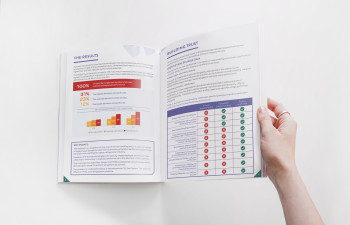
This CO2 test campaign builds on a previously released study on HFC air-cooled condensers, with the results from both studies used to simulate the impact of heat exchanger underperformance in a new white paper, Beyond the brochure: Exposing the reality of refrigeration product underperformance.
View certified heat exchangers
View certification programme information
*In the Eurovent Certified Performance programme for Heat Exchangers, condition 3 correlates to the C3 condition as described in the technical certification rules.
** In the Eurovent Certified Performance programme for Heat Exchangers, condition 4 correlates to the C2 condition as described in the technical certification rules.
New White Paper - Beyond The Brochure
When regional performance doesn’t add up
Join our LinkedIn community!