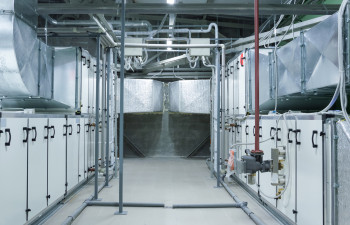
All you need to know about air filters in air handling units


Summary
Air Filters in an Air Handling Unit (AHU) play a vital role in maintaining indoor air quality (IAQ), protecting occupants from particulate matter, allergens, microorganisms, and other airborne pollutants. Selecting the right filter depends on the application, required filtration efficiency, and indoor air quality objectives. Modern ventilation systems increasingly rely on filters classified according to ISO 16890, while high-efficiency EPA, HEPA, and ULPA filters are tested according to EN 1822 and ISO 29463. Proper filter maintenance and replacement are essential to ensure energy-efficient operation and consistent performance.
What are air filters?
Air filters are essential components of modern ventilation systems. They help improve indoor air quality by removing airborne particles such as dust, pollen, mould spores, bacteria, and fine particulate matter before air is supplied to occupied spaces. From offices and schools to hospitals and industrial facilities, effective filtration contributes to healthier indoor environments and more efficient HVAC operation.
What are the parts of an AHU?
An AHU is comprised of a series of parts and functions that combine to draw outside dirty air and to draw in fresh air. The parts are:
- Air intake – The AHU draws in outside air to be treated and distributed indoors once it has passed through the AHU’s filters and cleaned.
- Air filter – The filter traps the particles and pollutants in the air, depending on the type of filter used and what is contaminating the air.
- AHU fan – The fan pushes the clean air out of the AHU through the ventilation and air conditioning ducts to distribute the fresh, cleaned air into the building.
- Heat Recovery System – This component transfers heat between exhaust and supply air streams, helping to pre-heat incoming outdoor air during winter while reducing overall energy consumption.
- Cooling coil – This cools the air as it passes through the system.
- Silencers – AHUs can be rather noisy, so silencers reduce the noise from loud elements of the AHU when it is operating.
- Plenums – These boxes bring in, remove and distribute air.
Today's AHUs are increasingly designed to balance indoor air quality with energy efficiency. Features such as heat recovery, demand-controlled ventilation, and high-performance filtration help buildings achieve both sustainability and occupant comfort objectives.
How does an AHU work?
An AHU is an efficient way to improve air quality within buildings. As part of a ventilation and air conditioning system, they are designed to clean and circulate fresh air to ensure a healthy environment for inhabitants.
A supply AHU moves fresh air around a building through a network of ducts. First, it takes in air from outside. The air then passes through different parts of the unit, such as filters to clean it, and heaters or coolers to adjust its temperature. A fan then pushes the cleaned and treated air through the ducts and into the rooms. Some AHUs can also control humidity or recover energy from outgoing air to help improve comfort and reduce energy use.
A return AHU is a simpler unit and may include only a fan and damper, to pull in exhaust air and expel it to outside of the building.
A key part of the air treatment process is filtration. Filters remove particulate matter, allergens, dust, microorganisms and other airborne contaminants before conditioned air is distributed throughout the building. The filtration strategy selected will depend on the building type, air quality objectives, occupancy levels and applicable regulations.
How do you select air filters for your AHU?
This depends on where and how the AHU will be used. For example, the air pollution in a manufacturing facility is going to contain different size particles to that of residential homes. Today’s urban air quality is polluted by smaller particles and gases that are generated from outdoor pollutants, i.e., from diesel and combustion engines. This means that the air filter selected needs to be able to remove the smaller particle sizes, as well as fungal and bacterial spores, to provide better indoor air quality.
Manufacturing industries usually require a different type of air filter to hospitals, for example, because of the type and size of the particles that need to be removed from the air.
You will also need to consider the filtration efficiency required for the application. Factors such as outdoor pollution levels, occupancy density, building use, energy consumption and maintenance requirements should all be considered when selecting an air filter.
Modern ventilation filters are commonly classified according to ISO 16890, which evaluates their ability to capture particulate matter. Filters are categorised according to their efficiency against PM1, PM2.5, and PM10 particles, helping designers select filtration solutions that are aligned with specific indoor air quality objectives.
Because fine particles can penetrate deep into the respiratory system, PM1 filtration has become an increasingly important consideration in urban and densely populated environments.
What are the filter types?
There are several types of filters available for AHUs:
- Bag filters
- Compact filters
- Pleated panel filters
- Electrostatic filters
- EPA filters
- HEPA filters
- ULPA filters
Bag filters
The most common type of filter is the bag filter, which consists of 4 to 12 bags laid parallel to each other. The length and depth can vary — from 300mm to 900mm — and they can range from low-efficiency coarse filters to very highly-efficient fine filters, depending on the thickness of the filter material and the number of bags used. The bags can either be tapered to enhance airflow or straight.
Bag filters remove dust from the air through a series of processes including sieving, inertial collision, hooking, diffusion, gravitational sedimentation and static electricity.
This type of filter is normally used to capture harmful and poisonous gases, as well as related dust particles that are emitted in industries that manufacture cement, glass and fertiliser.
Compact filters
Comprised of pleated panels mounted in a rigid frame, compact filters come in a variety of shapes. They are made to a depth of 292mm and use wet-laid micro glass or synthetic fibre pleated into a filter pack. When sealed into the frame, they form a V shape which provides the maximum level of filter. The pitch and height of the pleat, the surface and the number of Vs determine the filter performance and quality.
Compact filters are commonly selected where higher filtration efficiency is required but installation space is limited, making them a popular solution in many modern AHU designs.
Pleated panel filters
This type of filter is used to extend the life of the filter media, enabling the air velocity through the filter medium to be much lower than the face velocity, creating the right efficiency at an acceptable drop in pressure. The pleated panels are made from a blend of synthetic polymers, often incorporating electrostatic charges, and the pleat can range in depth from 25mm up to 300mm. To ensure maximum efficiency with this type of filter, the pleat height, spacing and the filtering surface must be optimised, whilst the shape of the pleat can be used to improve the initial pressure drop.
Pleated panel filters are frequently used as pre-filters, helping to protect more expensive downstream filters while extending overall system life.
EPA, ULPA and HEPA filters
EPA, HEPA and ULPA filters are used in applications where exceptionally high filtration performance is required, including healthcare facilities, pharmaceutical manufacturing, cleanrooms, laboratories, microelectronics production and certain industrial processes.
These filters are classified and tested according to EN 1822 and the international standard ISO 29463. Performance is evaluated at the most penetrating particle size (MPPS), ensuring consistent and verifiable filtration efficiency.
Research conducted during and after the COVID-19 pandemic demonstrated that high-efficiency filtration can help reduce the concentration of airborne particles, including virus-carrying aerosols, when used as part of a well-designed ventilation strategy.
What are filter maintenance requirements?
Regular inspection, maintenance and replacement of filters are essential for maintaining indoor air quality and ensuring energy-efficient operation. Filters that become excessively loaded with contaminants can increase pressure drop, resulting in higher fan energy consumption and reduced system performance. Always follow the manufacturer's recommendations regarding maintenance intervals and replacement schedules.
Frequently Asked Questions
What filter efficiency should I choose for an AHU?
The appropriate filter efficiency depends on the building type, occupancy levels, outdoor air quality, and indoor air quality objectives. Many modern ventilation systems use filters classified according to ISO 16890, with particular attention paid to PM1 filtration in environments where fine particles are a concern.
What is the difference between ISO 16890 and HEPA classifications?
ISO 16890 is used to classify general ventilation filters based on their ability to capture particulate matter such as PM1, PM2.5 and PM10. HEPA, EPA and ULPA filters are classified according to EN 1822 and ISO 29463 and are designed for applications requiring exceptionally high filtration efficiency.
How often should air filters in AHU be replaced?
Replacement frequency depends on operating conditions, air quality, occupancy levels and filter type. Filters should be inspected regularly and replaced according to the manufacturer's recommendations or when pressure drop and performance indicators show that replacement is required.
Why should I choose Eurovent-certified filters?
Eurovent-certified filters give specifiers, facility managers and building owners confidence that the performance data they rely on has been independently checked. Eurovent Certification verifies key characteristics such as filtration efficiency, pressure drop and annual energy consumption, helping users compare products fairly and select filters that support both good indoor air quality and energy-efficient operation. Certification also includes ongoing surveillance, so declared performance continues to be monitored over time.
Discover more
Search for certified air filters
Find out more about the air filter programme
Indoor Air Quality in educational buildings
Residential ventilation: Price vs performance
Programme focus: Hygienic Air Handling Units (HAHUs)
Certify Your Products