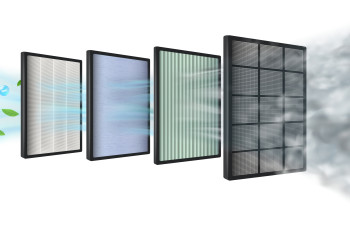
When it comes to improving indoor air quality (IAQ),purifiers and humidifiers both have benefits. An air purifier cleans air by filtering or treating airborne pollutants such as dust, pollen, pet dander, mould spores and, depending on the technology, some gases or microorganisms. A humidifier does not clean the air; it adds moisture to help relieve discomfort caused by dry air. It is important to note that they are not the same and have completely different uses and qualities.
There are many different types of humidifiers. Put simply, they are devices that release water vapour or steam into the air to increase moisture levels, or humidity.
The different types of humidifiers include:
Central humidifiers: These are built into the HVAC system and are designed to control the humidity of the entire building.
Ultrasonic humidifiers: These use ultrasonic vibrations to create a cool mist.
Impeller humidifiers: A rotating disk is used to create and distribute a cool mist
Evaporators: This method uses a fan to blow air through a moistened absorbent material to add moisture to the air
Steam vaporisers: Steam vaporisers create a warm mist of steam using electricity, which then cools in the unit before it is emitted. This is not a suitable humidifier for a baby or children as the hot water inside this humidifier may cause burns if it spills.
The moisture in your home air can vary. It is affected by the season, weather, and also your home’s location. Usually, humidity levels are highest in the summer and lowest during the winter. Many household and indoor air quality recommendations place comfortable indoor relative humidity broadly between 30% and 60%, with 30% to 50% often cited for homes and sustained levels above 60% best avoided because they can encourage condensation, mould, dust mites and microbial growth.
Low humidity can irritate your skin, nasal passages, eyes and throat and even cause dry skin. Higher humidity levels can make your home feel uncomfortable and stuffy and can cause condensation on walls, floors and other surfaces, which in turn can trigger the growth of harmful allergens such as moulds, bacteria and fungi. These allergens can cause respiratory problems and exacerbate allergies and asthma.
Air purifiers are devices that draw indoor air into a unit, pass it through one or more air cleaning technologies, and return treated air back into the room. Unlike a humidifier, an air purifier does not add moisture. Its purpose is to reduce airborne pollutants and improve the quality of the air you breathe.
The different types of air purifiers include:
Mechanical filtration air purifiers: These use filter media, such as HEPA or high-efficiency filters, to capture airborne particles including dust, pollen, pet dander, mould spores and fine particles.
Activated carbon air purifiers: These use carbon-based media to help reduce certain odours and gaseous pollutants, depending on the filter design and the substances present.
Electrostatic air purifiers: These charge airborne particles so they can be collected on plates or surfaces inside the unit.
Ionisation, plasma and UV-based air purifiers: These use electrical or light-based technologies to treat air pollutants.
Combined-technology air purifiers: Many air purifiers combine more than one technology, such as mechanical filtration with activated carbon, to target different pollutants.
The main benefit of using an air purifier is that it can reduce exposure to airborne pollutants inside the home or building. This can be particularly useful for people concerned about dust, pollen, pet dander, mould spores, smoke, fine particles, odours or pollutants from everyday activities such as cooking and cleaning. A air purifier with independently verified performance data can help users choose a product that is correctly sized for the room and suitable for the pollutants they want to reduce.
For best results, an air purifier should be used as part of a wider indoor air quality strategy that also includes good ventilation, source control, regular cleaning and appropriate maintenance. Filters or collection plates should be cleaned or replaced according to the manufacturer’s instructions, and buyers should check performance information such as clean air efficiency, airflow, recommended room area, sound level, energy consumption and any declared ozone emissions.
Thank you so much for subscribing to our newsletter! We're thrilled to have you as one of our subscribers !
classic-newsletter-notification-error
Stay aware of all our updates by subscribing to our newsletter.
Stay aware of all our updates by subscribing to our newsletter.
A humidifier is not designed to remove allergens from the air. It may relieve symptoms linked to dry air, such as a dry throat or irritated nasal passages, but it will not reduce airborne allergens such as dust, pollen or pet dander. If humidity is too high, it can also encourage dust mites and mould, which may worsen allergy symptoms.
In addition to this, if a humidifier isn’t properly maintained and cleaned, it can develop mould and introduce harmful pollutants into the environment which can trigger asthma and allergy symptoms. So, it’s vital to maintain your humidifier and make sure you are regularly replacing filters.
If you want to improve air quality and reduce or remove allergens from the air to reduce exposure to allergy or asthma triggers, then mechanical filtration air purifiers and electrostatic air purifiers are well-suited to this task. For most homes, a mechanical filtration device with a suitable clean air delivery rate for the room is a popular choice.
A humidifier can ease the symptoms of asthma if dry air is exacerbating them; however, it will not have an effect on the asthma or its causes. In fact, there is evidence to link high humidity levels with an increased rate of asthma attacks as it can encourage the growth of harmful bacteria, dust mites, and mould.
As most asthma attacks are triggered by airborne pollutants, an air purifier is a sensible purchase as it can remove the pollutants that irritate asthma sufferers.
With one in 12 adults suffering from asthma, it’s a common illness with a wide range of symptoms, from coughing and wheezing to alarming attacks. People suffering from asthma have inflamed bronchial tubes. This means that airborne pollutants can further irritate the respiratory system of asthma sufferers and increase the frequency and severity of symptoms.
Using an air purifier with the ability to remove both small and large pollutants from the atmosphere, can help reduce exposure to asthma triggers for some people. However, asthma sufferers should follow medical advice, and air cleaning should be treated as one part of a wider approach that may include ventilation, humidity control, cleaning and trigger reduction.
As with asthma and allergies, a humidifier can be useful in relieving dryness-related irritation, such as discomfort associated with the common cold or flu. In the case of airborne viruses, some studies suggest that maintaining indoor relative humidity in a moderate range may reduce the survival or infectiousness of certain viruses, although a humidifier should not be treated as a disease-prevention measure on its own.
However, it is important to note that a humidifier cannot play a role in helping you recover from these illnesses; it can only soothe symptoms such as an inflamed nasal passage, sore throat and dry eyes that may be irritated by dry air.
An air purifier can help reduce respiratory irritation by lowering exposure to airborne particles. A correctly sized air purifier with suitable filtration, such as a high-efficiency mechanical filter, can reduce airborne particles, including some virus-containing aerosols, but it should be used alongside good ventilation, hygiene and source-control measures.
The main strength of a humidifier is to combat illnesses or ailments that are exacerbated by dry air, such as bronchitis and sinusitis. While a humidifier cannot cure these conditions, it can relieve the symptoms.
An air purifier alone cannot soothe symptoms irritated by dry air as it has no facility for adding moisture to the air. When combating both the symptoms and illness, a combination of both a humidifier, for relieving symptoms, and an air filter, for removing the irritants, is the most effective course of action.
They can be used in combination. However, the units should be kept apart as the moisture created from a humidifier may limit the utility of the air purifier, clog the filters or even encourage the growth of harmful mould and bacteria on the filter.
It is best to keep the units at opposite ends of the room and maintain both frequently. For a humidifier, this means frequent cleaning and disinfecting, using distilled water where possible. For an air purifier, this means monitoring the filters and cleaning or changing them regularly.
When choosing an air purifier, check that it is sized correctly for the room. Look for certified performance information such as clean air delivery rate or equivalent airflow data, the type of filtration used, noise level, maintenance requirements and any declared ozone emissions. Choosing a device suited to the pollutant you want to reduce will make it more effective and easier to use correctly.
No. They do different jobs. An air purifier is better if you want to reduce airborne pollutants such as dust, pollen, pet dander, mould spores or some fine particles. A humidifier is better if the air is too dry and you want to add moisture to help relieve dryness-related irritation. In some homes, both may be useful, but they should be positioned apart and maintained carefully.
No. A humidifier adds moisture but does not remove allergens, particles or pollutants. If humidity becomes too high, it can even encourage mould and dust mites, which may worsen allergy or asthma symptoms. To reduce airborne allergens, a correctly sized air purifier with suitable filtration is the more appropriate option.
Choosing a Eurovent Certified air purifier helps users compare products using independently verified performance data. The Eurovent Certified Performance programme covers residential and tertiary applications and assesses characteristics such as clean air efficiency for particles, with optional assessment for gases, microorganisms and allergens, as well as room area, airflow, sound power level and energy consumption. This gives buyers greater confidence that declared performance has been verified under defined certification rules.
Stay informed of the latest trends in Heating, Ventilation, Air Conditioning, and Refrigeration (HVACR). Follow us on LinkedIn for exclusive insights, industry news, and updates on certified products from the world leader in HVACR product certification.