Does an air purifier cool the room?


Summary
No, an air purifier does not cool a room or reduce room temperature like an air conditioner. However, models with a fan can create airflow that makes the air feel cooler through a wind-chill effect, especially if the clean air is directed towards you. Air purifiers are designed to improve indoor air quality by removing particles such as dust, pollen, pet dander and other pollutants - not to control room temperature.
What is an air purifier?
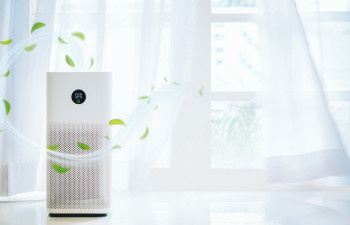
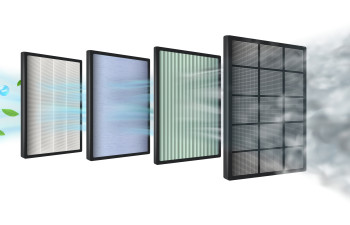
An air purifier is designed to "purify" or clean the air to improve its quality in a building, such as an office or a home. It draws in the air, and through the use of a fan and a filter, traps the pollutant particles, such as dust, pet dander, and pollen, and the fan then recirculates the clean air into the room.
The effect of the fan pushing out the clean air can create the feeling that the air, or room, is cooler, though usually only if the air is flowing in your direction and you are close enough to feel it on your body.
The cooling effect of the airflow you feel from an air purifier is called "wind-chill". The stronger the airflow, the cooler you will feel. The air purifier's airflow rating will give you some idea as to how strong the airflow will be.
An air purifier will have no effect on room temperature (and neither will a fan). They do not “cool the room” but rather lower a person’s temperature through the “wind-chill” effect. However, this process is very effective at improving comfort in warm conditions.
How much cooler you will feel in that airflow depends on the airflow rate of the air purifier, which often isn’t that high. Most air purifiers average 150 to 500 m3/h (cubic meter per hour) which is equivalent to 80 to 300 CFM (cubic feet per minute). A desk or ceiling fan is usually around 1700 m3/h (1000 CFM).
Of course, if the air purifier doesn’t have a fan and uses an ionizer instead, you will not feel any coolness in the air.
How does an air purifier work?
An air purifier is designed to draw in air that is full of pollutants and contaminants, push it through a filter that traps all the particles – some even help reduce odours and airborne viruses – and push out the clean air to recirculate in the room to improve the indoor air quality.
Air purifiers use motors to activate the process of drawing in and pushing out the air using fans. They are generally not working at full capacity for any length of time, so they're not in use for long enough to build up heat. Most of them don't even get warm.
In recent years, manufacturers have developed air purifiers that are able to clean the air as well as function as a fan, which helps to keep people cooler when the climate is hot. The design of these air purifiers allows them to draw in much larger volumes of air. This extra movement helps maintain comfort levels in warmer conditions.
Why does purifier air flow matter?
You might think that the way the air flows doesn’t matter – actually, it does. Air purifiers come with an upward airflow or a forward airflow. With upward airflow, the unit draws in air from the front, sides, or back, or all directions, and pushes the clean air up towards the ceiling.
You are unlikely to get any airflow in your direction or benefit from a cooling effect. As the air is being directed to the ceiling, the “wind-chill” factor will not be felt.
Air purifiers that have a forward airflow draw in the air from the back and push out clean air to the front and if you are in that line of airflow, you will feel some coolness. Some of these types of air purifiers also oscillate, or move from side to side, changing the direction of the airflow.
The size of the room will also have an impact on whether the room will feel cooler when the air purifier is in use. In a smaller room, the airflow from the purifier may be more noticeable, which can make occupants feel cooler, even though the room temperature itself does not fall.
How to cool a room when you have an air purifier
Most air purifiers can improve comfort indirectly, and usually only when a forward airflow unit is used. However, there are ways to cool the room when using an air purifier:
- When it's hot outdoors, close the doors and windows
- Combine using the air purifier with a fan, such as a ceiling fan, or one that stands upright or sits on a table. However, it may take longer to clean the air as the fan will affect airflow to the purifier.
- The fewer people in the room, the cooler it will be when the air purifier has completed its cycle (which takes about an hour).
- Consider investing in an air purifier that oscillates, has a high airflow rating, or a unit that also works as a fan.
Alternatively, you can invest in an air conditioning unit or reversable heat pump.
Frequently asked questions
Can an air purifier make a room colder?
No. An air purifier will have no effect on room temperature (and neither will a fan). They do not “cool the room” but can make a person feel cooler by increasing air movement over the skin (if the unit has a fan and directs airflow towards you).
Can I use an air purifier with a fan?
Yes, you can use an air purifier with a separate fan to improve comfort in warm conditions. However, strong fan airflow may affect how efficiently air reaches the purifier, so placement matters.
Why should I choose a Eurovent-certified air purifier?
Choosing a Eurovent-certified air purifier gives you confidence that declared product performance has been independently assessed under the Eurovent Certified Performance for Air Cleaners programme. Certified data is published in Eurovent Certification’s public product directory, helping buyers, specifiers and end users compare products using transparent, reliable information and supporting better indoor air quality decisions.
Discover more
Search for certified air purifiers
View the certification programme
Do air purifiers help with allergies?
What is Indoor Air Quality?
Certify Your Products