New-build housing and heat pumps: why radiators deserve a rethink by design consultancies
Published at :
In new-build housing projects, the choice of heat emitters is often guided by design conventions or standardised solutions. However, advances in heat pumps and buildings with low heating requirements call for a re-evaluation of the role of water-filled radiators. Far from being confined to renovation projects, they can be a viable solution when sized for low-temperature operation.
The technical principle is well known: a hot water circuit comprises a heat generator, a distribution network and radiators installed in the rooms. With a heat pump, the aim is to limit the water temperature whilst ensuring comfort. In a new-build, where heat loss is better controlled, this balance may favour low-temperature radiators, provided that their sizing is incorporated from the design stage.
For design consultancies, the main benefit lies in the system’s controllability. Radiators allow heat to be distributed via convection and radiation, with the option of room-by-room control. This level of precision can cater to the varied uses within a home: bedrooms, living rooms, bathrooms or rooms used intermittently do not always have the same hourly requirements or the same comfort settings.
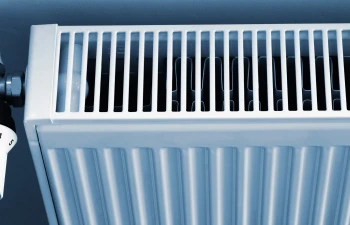
Modern radiators also offer a wide range of installation options: horizontal or vertical formats, panels, tubes, columns, towel warmers, various sizes and aesthetic choices. This flexibility makes it easier to fit them into constrained layouts, provided their location is planned in advance. The position within the room remains a technical consideration: the radiator must be able to exchange heat effectively with the ambient air and compensate for any ‘cold wall’ effects.
Radiators fitted with a thermostatic valve allow for individual temperature control per room, meaning each radiator can be controlled independently according to the specific comfort requirements for the room’s use. This configuration directly meets the requirement for room-by-room control introduced by the regulation decree, as it offers occupants the ability to fine-tune the temperature of each space without relying on a single, centralised setting for the entire dwelling or building. When combined with low-temperature radiators, this equipment is fully in line with a simple yet high-performance design philosophy, compatible with the comfort and energy efficiency objectives expected in both new-build and renovation projects.
The energy compatibility of the water loop is another key design consideration. A hot-water heating system can be powered by a heat pump, but can also be adapted to other heat sources or hybrid configurations depending on the project. This scalability is a significant factor in a long-term approach, particularly when buildings will need to adapt to changing uses, energy prices or environmental requirements.
However, specifications must be based on robust data. Declared and certified power ratings, dimensional characteristics and operating conditions are essential for ensuring the reliability of calculations. Professional databases and certification schemes help to provide this information, which is useful for both thermal studies and product selection.
Thank you so much for subscribing to our newsletter! We're thrilled to have you as one of our subscribers !
classic-newsletter-notification-error
Stay aware of all our updates by subscribing to our newsletter.
Stay aware of all our updates by subscribing to our newsletter.
In this context, NF-certified water-filled radiators can serve as a point of reference for design consultancies. Certification provides a framework of confidence regarding the specifications used in calculations and in specification documents. It also helps to document design choices when a project seeks consistency between the low-temperature heat generator, the emitters and the building’s overall performance.
Reconsidering radiators in new-build projects does not, therefore, mean pitting different heating solutions against one another. Rather, it is a matter of broadening the design rationale. A high-performance heat pump is not enough if the rest of the system does not allow it to operate under the right conditions. Conversely, radiators suited to low-temperature operation can contribute to an energy-efficient, comfortable and controllable system.
For design consultancies, the correct approach is to treat radiators as active components of the overall performance. By incorporating them from the earliest stages of the project, it becomes possible to ensure comfort, to size the system precisely and to propose a solution consistent with the expectations of new-build housing.
Join a globally recognised certification scheme for HVAC&R products. Ensure compliance, prove your product performance, and stand out with reliable, independently tested data.