How to select an air handling unit?


Summary
This article explains how to select an air handling unit (AHU) by assessing airflow, size, fans, heat recovery, filters, casing, installation needs, hygiene and energy efficiency. It also outlines how Eurovent Certified Performance helps specifiers and buyers compare AHUs using independently verified performance data, supporting more reliable product selection.
What is an Air Handling Unit?
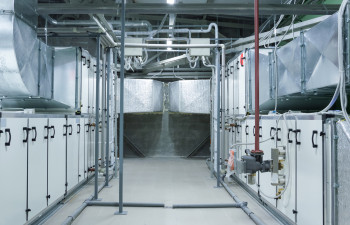
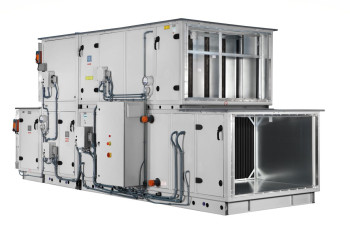
An air handling unit (AHU) is a machine that both conditions and circulates the air in a house or building. A very simple definition of an AHU is a "box with a fan, coils, and filters that controls the air indoors". To explain further, AHUs are units that are connected to the HVAC system and are responsible for a number of tasks including heating, cooling, cleaning and adding humidity to the air.
However, while this simple explanation may describe the basics of AHUs, that doesn’t mean that they all perform in the same way, or even have the same basic functionalities. Performance can depend on the components and is often affected by the climatic conditions where the AHU is situated. Some units may provide air circulating, heating, and air conditioning, while others may only perform air circulating.
Air handling units are often tailor-made for buildings to ensure all requirements are met. It’s important to understand the components and functions of any AHU before purchase.
How do you choose an AHU?
When considering an AHU there are a number of considerations to factor into your decision to ensure you are purchasing the most efficient and cost-effective unit for your needs.
We’re going to break down each component, however, it’s important to consider the unit as a whole, as well as evaluating the individual aspects of AHUs.
Airflow
The first consideration is the desired airflow that the AHU must handle. Once this is understood, it should inform you what size and capacity the AHU needs to be. The amount of air that an air handler can condition and distribute is measured in L/s (litres per second).
When considering an AHU, you will need to determine the airflow required for the application, taking into account factors such as occupancy, indoor air quality needs, room use, applicable guidance and the heating or cooling load of the space. To do this, you begin by calculating the volume of the space the AHU will condition. Then, you must decide how many air changes are required for the space. There are guidelines on the CIBSE (Chartered Institution of Building Services Engineers) for this.
Dimensions and modularisation
When it comes to the size of the AHU, there are a few considerations. Not only should the size of the air handling unit be large enough to accommodate the filters, heat exchangers and access sections for maintenance and fans, it must also pay attention to the space available in the plantroom and also adhere to any building regulations. Often, detailed 3D or BIM (building information modelling) representations of the unit are used in the planning or design process to ensure the AHU size is correct for the building.
As an AHU can be unwieldy, it can be delivered in modules to allow for easier transport and installation. In this case, there’s not only the size of the doors and elevators in the destination building to consider but also the method of transport. Having a modular design AHU avoids the need for costly special transport, instead allowing the system to be delivered in sections.
Fans and energy recovery
When it comes to fans inside the AHU, it’s not only size that’s important but also proximity. Where the fan impeller sits inside the AHU can influence the fan efficiency. It’s also important to consider the style of the fan. Belt-driven fans often require more maintenance than direct-driven fans as the belt drive can become worn.
Energy efficiency is also an important consideration for modern buildings, so the calculated value of the internal specific fan power (SFPint), expressed in W/(m³/s), should be kept as low as possible. SFPint represents the internal specific fan power of ventilation components and reflects the relationship between internal pressure drops and fan efficiency in the ventilation unit.
Often, the total energy efficiency of the entire building is dependent on how efficient the heat recovery system – from the exhaust air stream to the supply air stream – is. To make an informed decision you need to consider the trade-off between pressure drop and thermal efficiency when purchasing an AHU. This is included in the Eurovent Certified Performance energy efficiency classification.
The use of cooling recovery varies depending on the climate. In warmer climates, cooling recovery use with 100% outside air reduces the amount of cooling power needed. When combined with enthalpy recovery and a thermal by-pass, efficiency is increased further.
Filters
One of the most vital parts of the AHU system, the filters are responsible for delivering clean, fresh air throughout the building. Particle pollutants lead to poor air quality and smaller particulate matter can even be hazardous to human health.
For full efficiency, an AHU should have as much filter area as possible. This not only enables a high dust holding capacity, but also a longer filter change cycle, reducing the need for maintenance due to pressure drop.
Climate also has an impact on the filter sections as the incorrect material could be damaged by corrosive condensate. Floor panels should be assessed in depth to ensure they are an appropriate material or have a suitable coating.
Casing
Any casing for an AHU needs to be strong enough to withstand maximum fan pressure, without exceeding the deflection limits. To circumvent this, a strong casing with panels and frames should be used. It’s also vital to ensure that the casing is airtight to ensure maximum efficiency of the ventilation system.
AHU casing should also be thermally insulated to reduce the thermal transmittance and also reduce heat loss and local condensation. The amount of thermal transmittance depends on the local climate. Where there is a greater difference between the ambient air and airflow temperature, lower thermal transmittance is generally needed to reduce heat loss and condensation risk.
Corrosion resistance is also a consideration, with units close to the sea, industrial processes and pool applications requiring a higher grade of corrosion resistance.
Installation
As most AHU systems are installed outdoors, there are a number of factors to consider. As previously mentioned, corrosion resistance is one of them. In addition to this, UV resistance must be taken into account. Weather louvres and exhaust hoods should be designed and installed to avoid short-circuiting between the outdoor and exhaust air streams.
Noise is also an important factor. An AHU should specify both the sound insulation of the casing and the in-duct sound power to ensure any noise created by the AHU does not reach disturbing levels.
The AHU also needs to meet standards for mechanical safety and fire protection.
Hygiene
To avoid condensation and biological contamination, there are a number of steps to take. An appropriate choice of inner surface material, the arrangement of fans, filters and cooling coils with sloping drip trays will all ensure the AHU is hygienic. The AHU should also be correctly sealed to avoid dirt accumulation. There are general requirements for inspection, maintenance, and cleaning, particularly regarding filters and their upkeep.
Which features are essential for Eurovent Certified Performance?
AHUs can be complex apparatus with a range of installation considerations and components. It can be difficult to evaluate which features and functionalities are vital and will keep the AHU running smoothly and efficiently. Additionally, not every AHU is made equal, and some will perform better than others depending on your specific requirements.
To help you make an informed decision, the Eurovent Certified Performance programme for AHUs verifies declared product performance data through an impartial third-party certification process. This certification covers a number of functionalities and performances.
Airflow – Available static pressure – power input
Airflow is generally expressed in cubic metres per hour (m³/h) or litres per second (l/s). This is the amount of air the AHU can circulate.
The available static pressure in pascals (Pa) provided by an AHU allows the unit to overcome the pressure drops within the duct system.
Finally, the power input in watt (W) or kilowatt (kW) indicates the electrical energy consumption of the AHU.
Sound Power levels
Fans integrated in AHUs are producing noise. The Sound Power levels are measured in decibels (dB).
Heating / Cooling capacity
AHUs can be used to heat or cool the building as it might include heating and/or cooling coils.
Heat recovery
The amount of energy recovered within an AHU is expressed in percentage (%). Heat recovery helps to mitigate the energy consumption of the HVAC system due to the air change rate.
Casing performances
AHU casings (or model boxes) are characterized by their strength, external and internal airtightness, thermal insulation, and acoustic insulation.
Energy efficiency
Eurovent certified AHUs are characterised by their energy efficiency class, which ranges from A+ (most efficient) to E (least efficient). These energy efficiencies consider all relevant aspects of an AHU: fan efficiency, air speed through the AHU, heat recovery efficiency, and heat recovery pressure drop.
Products within the scope of the Eurovent Certified Performance AHU programme are assigned an energy efficiency class covering these criteria, helping specifiers and buyers compare declared performance data and select an AHU suited to the project requirements.
Frequently asked questions
What is the most important factor when choosing an AHU?
The right AHU depends on the building and application, but airflow, energy efficiency, available space, filtration, heat recovery, noise levels and installation conditions should all be considered together rather than in isolation.
Why is AHU energy efficiency important?
AHUs can have a significant impact on a building’s overall energy consumption, particularly through fan power, air velocity and heat recovery performance. Selecting an efficient AHU can help reduce operating costs while supporting comfort and indoor air quality.
Why choose Eurovent certified products?
Choosing Eurovent certified products gives buyers, consultants and specifiers greater confidence that AHU performance claims are reliable, comparable and independently verified. Certification provides a recognised industry framework for measuring and comparing performance, while the Eurovent Certified Performance programme verifies declared data through impartial third-party laboratory testing, factory audits, selection software audits and regular checks. This reduces reliance on manufacturer claims alone and helps users select products that are better suited to the building’s needs, energy efficiency goals and long-term operational performance.
Where hygiene is a key requirement, selected AHUs can also be certified under the hygienic AHU option, supporting clearer specification for applications with stricter indoor air quality or hygiene needs.
Discover more
Search for certified Air Handling Units
View the AHU certification programme
Residential ventilation: Price vs performance
Programme focus: Hygienic Air Handling Units (HAHUs)
Certify Your Products